
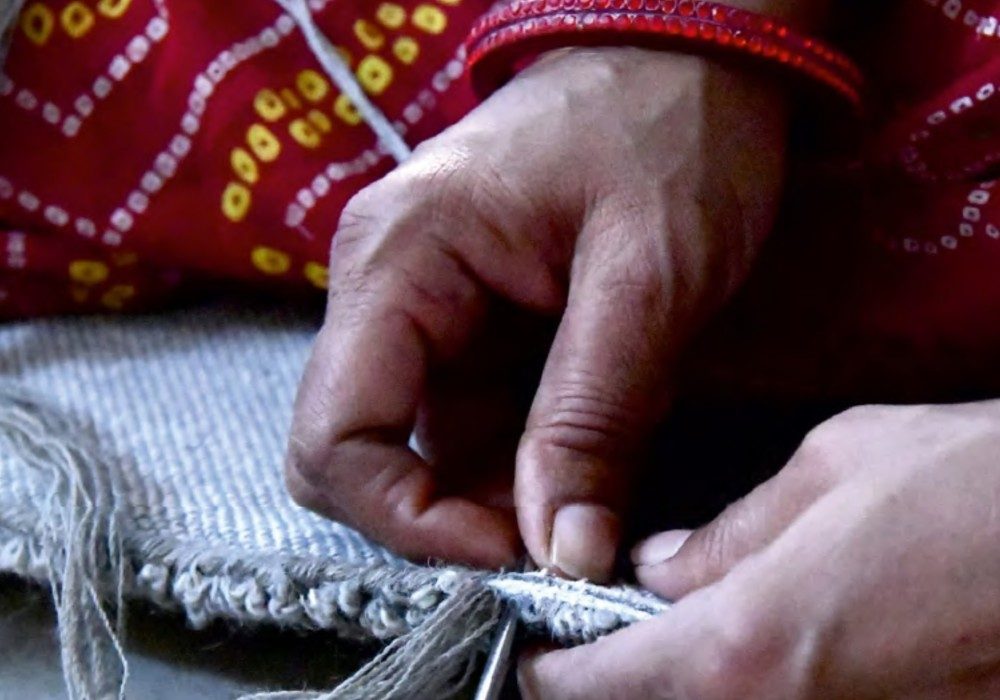
From Village to Modern Living Room: The Timeless Craft of Hand-Tufted Rugs
Hand-tufted rugs are not just home decor—they are a living testament to a centuries-old tradition that spans across cultures and continents.

While hand-weaving was once the dominant method of carpet-making, tufting emerged as a more efficient and innovative way to create intricate designs with speed and precision. These rugs hold deep cultural significance, particularly in regions where rug-making has been passed down through generations.
For the artisans who craft them, rug-making is more than a profession; it is an expression of identity, history, and pride.
When these handwoven masterpieces leave the villages where they are made and make their way to modern living rooms, luxury hotels, and corporate spaces around the world, they undergo a transformation.
They evolve from functional textiles into pieces of art that shape the ambiance of any room. The process, cultural importance, and journey of hand-tufted rugs highlight not only the artistry behind them but also the rich craftsmanship that infuses each design with meaning.
In many villages, the craft of hand-tufting is a communal activity 🧵, often involving entire families. It’s a skill passed down through generations, deeply rooted in tradition, and honed over a lifetime.
Each rug crafted is a reflection of the care, patience, and expertise of the artisans who dedicate themselves to preserving this ancient art.
At Ortir India, we invite you to connect with the soul of hand-tufted rugs. It’s more than just a product; it’s a journey that intertwines art, history, and emotion.
Every piece carries with it the spirit of its origins—from the intimate workshops in remote villages to the modern, sophisticated spaces where these rugs bring beauty and warmth 🏡.
Let the journey of these remarkable rugs speak to you, not only through their intricate designs but also through the passion and craftsmanship that goes into every stitch.

The Rich History and Origin of Hand-Tufted Rugs
Hand-tufted rugs are part of a time-honored tradition that spans centuries, with origins rooted in ancient craftsmanship.
While hand-weaving carpets was once the dominant technique, tufting emerged as a more efficient method, allowing artisans to create intricate designs at a faster pace.
This innovative technique is believed to have originated in Persia, gradually spreading across regions and evolving as different cultures adapted it to their unique styles and materials.
In villages throughout India, Nepal, Iran, and Turkey, hand-tufted rugs have long been symbols of craftsmanship, pride, and cultural identity.

These rugs have been more than just decorative pieces; they have adorned homes, palaces, and sacred spaces, serving as both functional items and works of art 🕌.
In many cultures, they were treasured not only for their beauty but also for their value, often passed down through generations as heirlooms—carrying with them the stories, traditions, and memories of those who crafted them.
The enduring legacy of hand-tufted rugs reflects the rich tapestry of cultural history, artistry, and pride that continues to be honored today.
The Art of Hand-Tufting: A Deep Dive into the Craft
Hand-tufting is a skilled rug-making technique that uses a tufting gun to insert yarn into fabric, allowing for intricate designs, textures, and colors.
The process starts with designing the rug, often drawing inspiration from culture, nature, or tradition. Once the design is finalized, it’s transferred to the backing fabric, guiding the tufting process.
During tufting, yarns are pushed through the fabric to create pile and texture. Wool, silk, cotton, and synthetic fibers are common materials, with wool prized for its durability.
After tufting, the rug is trimmed, backed with a protective layer, and finished with binding to ensure longevity. A final washing enhances texture and removes impurities 🧼.

The designs and colors in hand-tufted rugs are rich in symbolism, often reflecting cultural values, history, and connections to the land.
- 🌸 Floral motifs in Persian rugs represent nature’s beauty.
- 🔷 Geometric patterns in Tibetan rugs symbolize Buddhist beliefs.
- 🔴🔵 Colors like red and blue signify strength and tranquility.
When these handmade creations make their way from the villages to living rooms across the world, they take on a new life.
Hand-tufted rugs are no longer just functional pieces—they become art that transforms a room’s atmosphere.
A well-placed hand-tufted rug can completely change the aesthetic of a living space.
Whether it’s a traditional Persian design or a contemporary abstract piece, the texture and vibrancy of the rug add warmth, elegance, and a sense of comfort to any room 🛋️.
The intricate designs, bold patterns, and rich colors act as a statement piece, drawing attention and sparking conversation.
Hand-tufted rugs also offer practical benefits.
Unlike traditional woven rugs, tufted rugs tend to be softer and thicker, providing a plush feel underfoot. They are an excellent choice for high-traffic areas, such as living rooms, where durability and comfort are essential.
Sustainable Practices and a Decent Living Place
Hand-tufted rugs from villages represent a more sustainable and conscious choice for home decor, as they celebrate local craftsmanship while minimizing the carbon footprint associated with mass production 🌱.

The designs on these rugs are more than aesthetic choices. They often represent a community’s folklore, history, or relationship with the environment.
- 🌸 Floral motifs in Persian rugs symbolize the natural beauty of the land.
- 🔷 Geometric patterns in Tibetan rugs often reflect Buddhist symbolism and the cosmos.
The use of colors in hand-tufted rugs also carries deep meaning:
- 🔴 Red can represent strength or good luck.
- 🔵 Blue might symbolize tranquility and peace.
In the village context, these colors and designs are more than decorative—they serve as a connection to the past, to ancestors, and to the community’s shared values.

First Steps on Hand-Tufted Rugs: A Child’s Journey and the Artisan’s Soul
There is a quiet magic in the first steps a child takes. Those early, wobbly movements as they transition from crawling to standing—and eventually to walking—mark a profound shift in their world 👣.

For the child, it’s a new chapter, a rite of passage. For the parents, it’s a moment filled with joy, pride, and wonder.
But beneath this milestone lies a deeper, more meaningful connection—one that links the child’s first steps with the artistry, tradition, and soul of a distant land, where an artisan in a small Indian village has spent hours, days, and even years crafting the very rug upon which those first steps will land.
This moment is not just about the innocence of a child discovering their legs for the first time—it’s about the intersection of two journeys: one of a child growing into their world, and the other of an artisan who has poured their heart into creating a piece of art.
These two paths, seemingly separate, converge in a single shared moment of beauty, history, and craftsmanship.
By choosing a hand-tufted rug, you’re not only enhancing the beauty of your space, but you’re also supporting the preservation of an age-old craft and the livelihoods of the artisans who continue to bring these masterpieces to life 💛.
So, next time you step onto a hand-tufted rug in your home, take a moment to appreciate the journey it has taken—from the heart of a village to the center of your living room—and the artistry and craftsmanship that went into its creation.
A New Home, A New Generation
Ortir India makes a special bond with each legacy of this rug. It is a reminder that art—whether it’s in the form of a hand-tufted rug, a piece of music, or a painting—holds deep emotional resonance.
It carries with it the experiences of those who created it, and it transforms the spaces we live in, infusing them with the essence of lives lived and stories untold 🎨.
The Cultural Significance of Hand-Tufted Rugs
Hand-tufted rugs are not merely decorative items; they carry with them deep cultural significance.
In India, rugs are often seen as symbols of wealth, status, and craftsmanship. They have been used for centuries in temples, royal palaces, and homes as a way to express artistry and cultural identity.
The intricate designs on these rugs often have symbolic meanings, with patterns representing elements of nature, life, and spirituality.

Each rug tells a story—whether it’s the symbolism behind the colors, the motifs used, or the place where it was made.
In the villages where Ortir India explores the rugs, the artisans weave their personal stories and cultural heritage into the designs, giving each rug a unique soul 🧶.
At Ortir India, the aim is not just to produce beautiful rugs, but to preserve and promote the cultural heritage of Indian rug-making.
By working with local artisans, Ortir India ensures that these age-old traditions are kept alive while introducing them to a global audience 🌍.
The Artisan’s Craft: The Soul in Every Knot
Behind this hand-tufted rug, in a small village in India, an artisan has spent countless hours weaving, tufting, and perfecting the very fibers that now touch the baby’s feet 👣.
For generations, families in India have passed down the skill of rug-making, and in each rug lies a piece of their soul, heritage, and labor.
The artisan, with skilled hands, has crafted every detail of the rug—from the intricate floral patterns to the vibrant colors that now surround the child.
For these artisans, the rugs they create are not just products to be sold. They are expressions of emotion, culture, and history.
The patterns in a rug can hold deep significance:
- 🌺 A floral motif may symbolize fertility and life.
- 🔶 A geometric design might represent balance and harmony.
The artisans pour their heart into these pieces, knowing that their creations will one day carry with them not only the weight of their craftsmanship, but also the energy of the hands that made them.
Why Tourists Choose Hand-Tufted Rugs in Five-Star Hotels to Experience the True Beauty of India
When a tourist steps into an Indian hotel, they may feel like they’ve arrived in another world—one full of vibrant colors, textures, and experiences 🇮🇳.
The addition of hand-tufted rugs underfoot serves as a reminder that they are in a country with a deep cultural history.
These rugs are carefully chosen to reflect the unique beauty and character of India, showcasing intricate patterns and designs that have been passed down through generations.
Explore with Ortir India—and when you stand on it, when you run your fingers across its surface, you become a part of that story too 🧡.
Recent Comments