
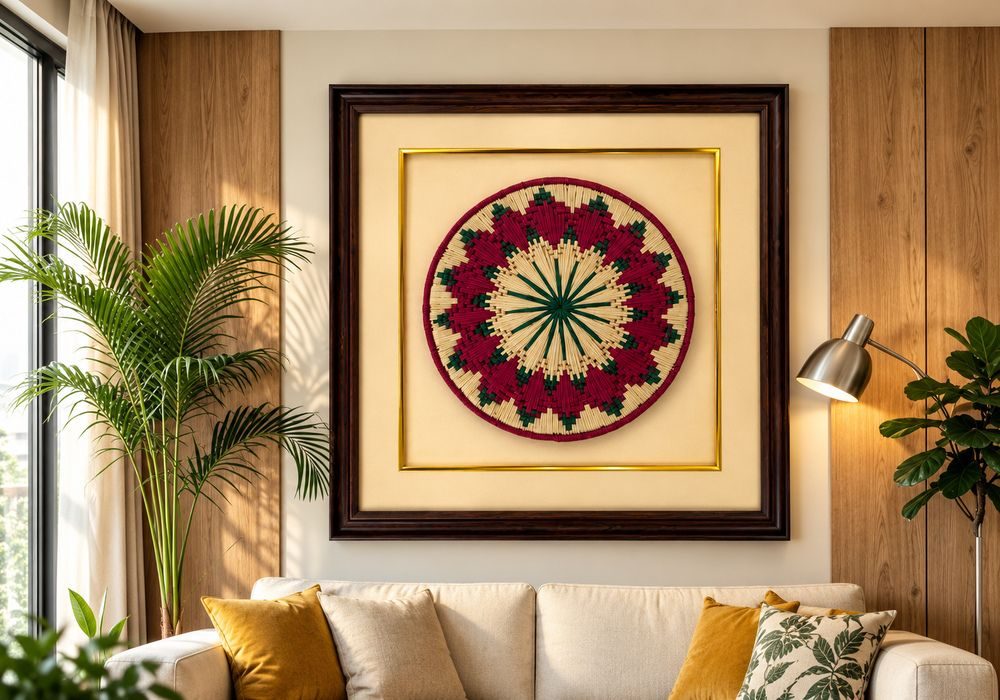
Where the Story Begins – With the Earth
Some things are made in factories. Some are designed on screens, shaped by machines, produced in thousands and made to look exactly the same. And then there are things that are not simply manufactured; “they are born from the Earth and shaped by life itself. Munj is one of them. It begins quietly, naturally, in the landscape of rural India, growing with the rhythm of the seasons and becoming part of the land around it.
It does not need to be transformed into something artificial to become beautiful. Its beauty already exists in its natural character, its texture, its strength and its simplicity. Munj grows close to the earth, touched by the sun, wind and changing seasons, and when it eventually reaches the hands of an artisan, it carries with it something of the landscape from which it came.
That’s why soul of rural areas is and Munj feels different. It does not merely represent nature; it allows a little piece of nature to enter our homes, our walls, our hotels, our workplaces and the spaces in which we live and gather.
There is something deeply humbling about a material that begins so simply. In a world where almost everything is engineered, processed and perfected, Munj reminds us that nature has its own intelligence. It grows without demanding attention. It survives without asking for applause. It simply belongs to the land. And that quiet strength becomes part of the finished craft. Every strand carries the memory of where it began – the soil, the sunlight, the open fields and the seasons. When we look at a handcrafted Munj piece, we are therefore not looking only at an object. We are looking at the meeting point between the earth and the human imagination.
The Hands That Know
But the story of Munj does not end with the grass. In many ways, that is where the real story begins. Once Munj reaches the artisan, nature meets knowledge that has been passed down through generations. These are hands that may never have entered a formal design classroom, never studied at an institute and never received a certificate declaring them masters of their craft.
Yet they know something that cannot easily be taught through books. They know the material through touch. They understand its strength, its flexibility and its rhythm. They know how a strand should be held, how it should be twisted, how it should be woven and how it should be shaped. This knowledge is not always written down. It lives in memory and movement.
For generations, mothers have taught daughters not by sitting them down for formal lessons, but by allowing them to watch. A young girl observes her mother’s hands moving through the material. She watches her grandmother work. She notices how a simple strand slowly becomes a pattern, a form or an object.
At first, she only watches. Then she tries. She makes mistakes, starts again and slowly develops the confidence of her own hands. This is how a craft survives. One generation becomes the classroom for another. A mother’s hands become a teacher. A grandmother’s experience becomes an invisible textbook. And the daughter becomes the next keeper of a tradition that existed long before she was born.
This is what makes handmade craft so deeply human. The artisan is not simply following a manufacturing process. She is continuing a conversation that began generations ago. Every movement of her hands carries memory. Every weave is connected to something she has seen, learned and experienced. The craft therefore becomes more than an occupation. It becomes a form of inheritance.
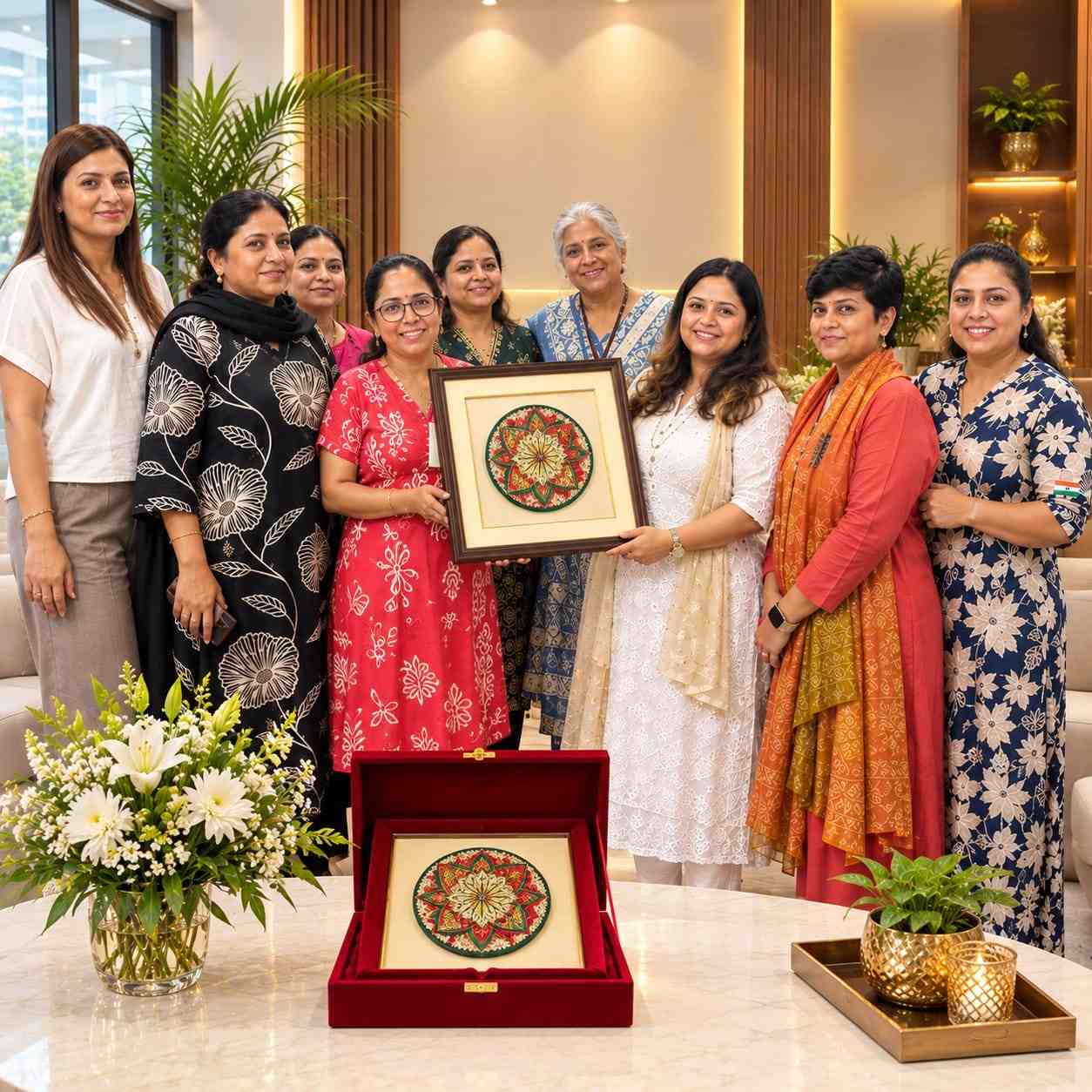
धूप: धूल: पसीना:– The Reality Behind the Beauty
Behind every beautiful handcrafted piece is a reality that deserves to be seen. We often admire the finished object without thinking about the hours, effort and patience that went into making it. But traditional craft is inseparable from the lives of the people who practise it.
The hands behind Munj have known long days, strong sunlight, dust, heat and the physical effort of working with natural materials. They have worked through circumstances that have not always been easy. For many rural artisan families, craft has been closely connected to livelihood, dignity and the simple desire to create a better life for the next generation.
There is something profoundly moving about this relationship between hardship and beauty. The artisan may know the uncertainty of everyday life, the pressure of earning enough for the family, the responsibility of raising children and the hope of giving those opportunities that perhaps were not available to her.
Yet when she sits down to weave, she does not simply reproduce her difficulties in the material. She creates something beautiful. She transforms what the earth provides into something that can enter another person’s life.
There is sweat in every strand. There is patience in every knot. There are hours hidden inside every finished piece. But perhaps most importantly, there is hope. The craft represents the belief that knowledge passed down from the past can still create a future. The hands that have carried tradition through difficult circumstances are also the hands that keep that tradition alive.
When the Earth Meets Contemporary Design
For a long time, traditional Indian crafts were often viewed as things belonging primarily to the past. They were associated with villages, traditional homes and older ways of living. But heritage does not have to remain frozen in time. A living tradition must be allowed to evolve, travel and find new places in the world. This is where Munj becomes especially exciting for contemporary design.
The natural texture of Munj can sit beautifully within modern interiors because it does not compete with the space; it adds warmth and character to it. Against clean architectural lines, natural wood, stone, neutral colours and contemporary furniture, Munj introduces something tactile and organic.
It creates a connection to nature without making a space feel overly traditional. A handcrafted Munj wall piece can become a quiet statement, bringing depth to a minimalist room while retaining the simplicity of the material.
At Ortir India, this relationship between traditional craft and contemporary design is at the heart of the “विरासत” philosophy. We believe that Indian heritage should not simply be preserved behind glass or remembered through photographs. It should be lived with.
It should enter our homes, our workplaces, our hospitality spaces and the places where modern India creates its future. When traditional craftsmanship finds a place in contemporary interiors, the past does not disappear. Instead, it becomes part of the present.
Munj as “विरासत” Wall Art – when a Wall Begins to Speak
A wall is often treated simply as an architectural surface, but it can become something much more meaningful when the right story is placed upon it. A handcrafted Munj installation does not merely fill an empty wall. It creates texture, warmth and visual character while carrying the story of the hands that made it.
Imagine walking into a room and seeing a large Munj artwork. Before anyone explains its origin, you notice its natural texture and handcrafted quality. Then you learn that the material began as grass growing naturally in rural landscapes, that it was gathered and prepared, and that an artisan shaped it using knowledge passed down through generations. Suddenly, the artwork becomes more than décor. The wall becomes a storyteller.
This is the difference between decorating a space and giving a space meaning. At Orti India, we believe that the most memorable interiors are not necessarily those filled with the most objects. They are the spaces where every significant object has something to say. Munj speaks of nature, craftsmanship, patience, India and human connection. It brings a quiet sense of authenticity into contemporary interiors.
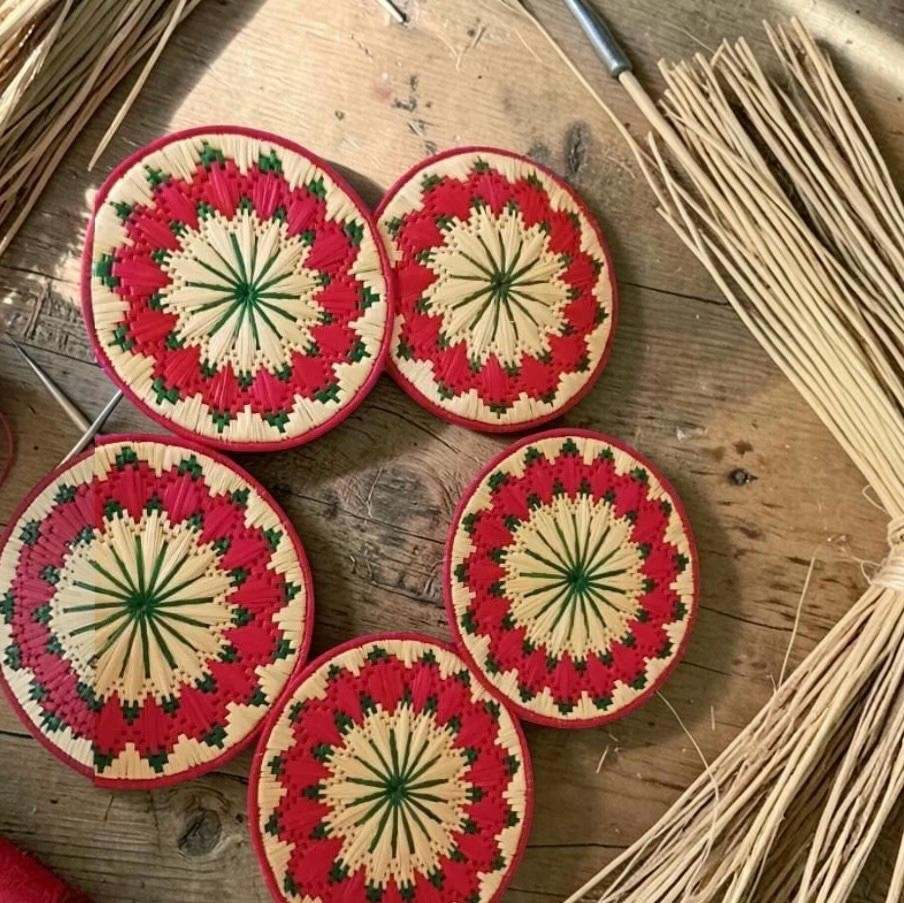
“विरासत” Natural Munj Grass Wall Art in Hospitality – Creating a Sense of Place
Hospitality is fundamentally about emotion. A hotel, resort, restaurant, café or retreat is remembered not only because of its architecture, furniture or facilities, but because of how it made people feel. Materials play an important role in creating that feeling.
Natural materials bring warmth and familiarity, while handcrafted elements create a sense that the space has been thoughtfully created rather than simply assembled.
Munj Wall Art décor can become a powerful part of that experience. Used as a feature wall, reception backdrop, room installation or decorative artwork, it can introduce an unmistakably organic quality into hospitality interiors.
It can complement wood, stone, linen and other natural materials while creating a visual connection to India’s craft traditions.
For hospitality spaces that want to communicate authenticity, rootedness and a contemporary understanding of Indian design, Munj offers something distinctive. It does not need to be loud or elaborate. Its strength lies in its quiet presence. The material allows guests to experience something natural and tactile while, at the same time, connecting them to a larger cultural story.
“विरासत” Natural Munj Grass Wall Décor in Corporate Spaces – Bringing Humanity to the Workplace
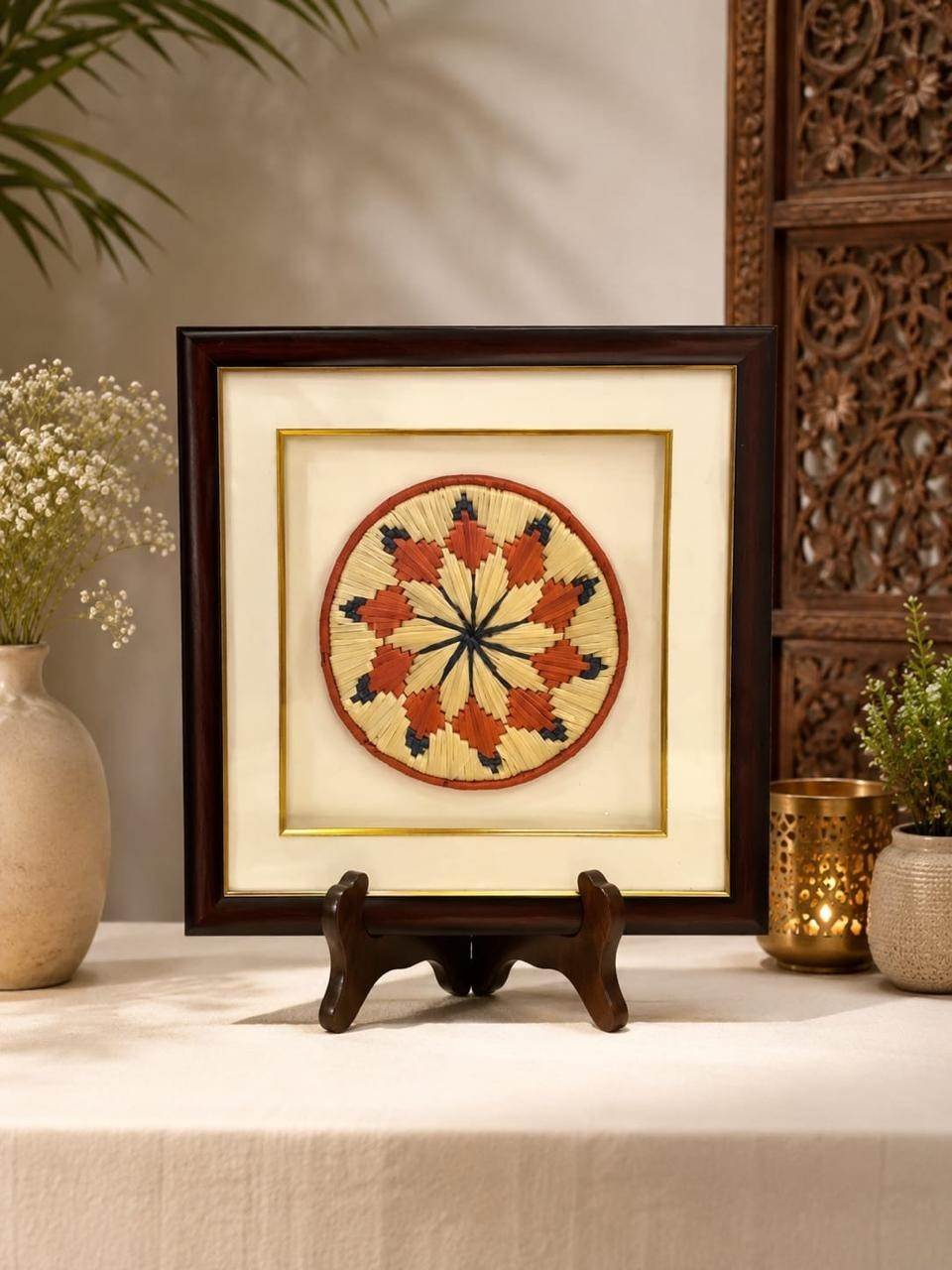
The modern workplace is changing. Offices are no longer designed only for efficiency. Increasingly, there is an understanding that people need environments that inspire, calm and connect them. Natural materials and handcrafted objects can play an important role in creating such environments.
“विरासत” Natural Munj Grass Interior in a reception area can create a warm first impression. A handcrafted wall in a boardroom can bring texture into an otherwise formal environment. A carefully designed piece can become part of a hospitality lounge, executive space or employee area. More importantly, it can communicate values without needing words.
Choosing handmade craft is a way of recognising the people behind the object. It acknowledges the value of traditional knowledge, human skill and natural materials. In a corporate environment, that can create a subtle but meaningful contrast to the highly manufactured world of technology, screens and machines.
The presence of Munj can remind us that even in spaces built around innovation and modernity, there is still room for things that are slow, tactile and human.
“विरासत” Natural Munj Grass Wall Art -A Corporate Gift with a Story
Corporate gifting has become increasingly crowded with objects that are quickly consumed, replaced or forgotten. A meaningful gift, however, has the ability to remain in someone’s space and memory long after the occasion has passed. This is where handcrafted Munj can become something more than a conventional corporate gift.
A Munj Wall Art piece carries a story from the moment it is created. It represents natural material, traditional knowledge and the hands of an artisan. When given as a gift, that story moves from the maker to the giver and finally to the receiver. It becomes a small connection between people who may never meet.
Instead of simply saying, “Thank you,” a thoughtful handcrafted gift can communicate something deeper: that the relationship matters, that the gift was chosen with intention and that the story behind the object is part of its value. For organisations looking for culturally rooted, design-conscious and meaningful gifting, Munj provides an opportunity to celebrate both Indian craftsmanship and contemporary aesthetics.
The Beauty of Imperfection
We live in a world obsessed with perfection. Machines can reproduce the same shape thousands of times. Digital design allows us to create precise symmetry. Manufacturing can make objects identical down to the smallest detail. But handmade craft offers us another kind of beauty – the beauty of character.
No two pieces of Natural Munj will ever be completely identical. The material itself carries natural variation. The artisan’s hands introduce subtle differences. The rhythm of the weave may change slightly. The texture may reveal small variations that make one piece different from another.
These are not shortcomings.
They are the fingerprints of the human process.
A small variation reminds us that someone sat down and made the piece. It tells us that the object was not simply produced by a machine. It was shaped by patience, experience and touch.
A little unevenness. A little rawness. A little unpredictability.
These qualities are not flaws to be hidden.
They are proof of life.
In a world filled with mass production, handmade imperfection becomes a form of authenticity.
What “विरासत” Wall Art Really Means
The word “विरासत” means inheritance, but inheritance is not simply about receiving something from the past. It is also about choosing what deserves to be carried into the future.
A tradition survives because someone continues it.
A craft survives because someone teaches it.
A skill survives because someone believes that it still matters.
That is why “विरासत” is not only about looking backward. It is about carrying something forward.
The Munj artisan carries knowledge received from a mother. The mother may have received it from her mother. And now, through contemporary design, that knowledge can travel far beyond the village in which it was born.
It can travel from a rural field to a metropolitan home.
From an artisan’s hands to an architect’s vision.
From a traditional craft to a contemporary wall.
From one generation to another.
This is the deeper meaning of preserving heritage. It is not about keeping something untouched. It is about giving it enough space to continue living.
The Journey of “विरासत” Natural Munj Grass Wall Décor from Village to Modern India
Every Munj craft piece has a journey. It begins with nature and continues through human hands. It moves from the landscape into the artisan’s world, from the artisan’s world into the design process, and finally into a new space where another person encounters it.
That journey connects worlds that can sometimes feel very far apart.
The rural artisan and the urban designer.
The traditional village and the contemporary home.
The inherited skill and the modern aesthetic.
The field and the finished interior.
Munj becomes the bridge.
It reminds us that modernity does not have to mean forgetting where we came from. Contemporary design can coexist with traditional knowledge. Innovation can exist alongside inheritance. And the future can make room for the past.
This is the philosophy behind “विरासत”.
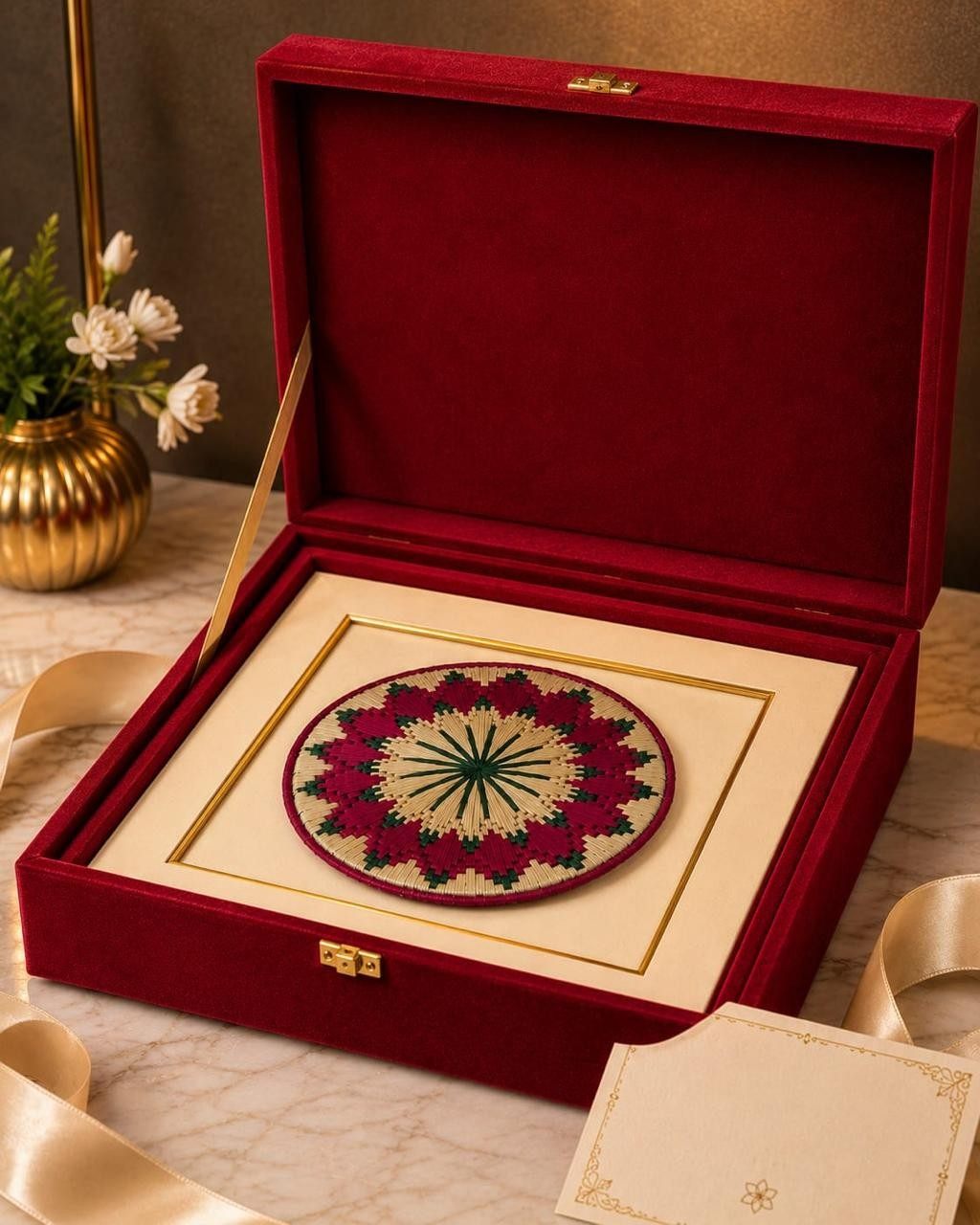
This Is Not Just Décor
When you place a Munj Wall Art piece on a wall, you are not simply decorating a room. You are introducing a story into that space. You are bringing in the character of a natural material, the skill of an artisan and the memory of generations.
When you place Munj inside a hotel or restaurant, you are creating more than an aesthetic moment. You are giving guests an opportunity to experience something rooted in Indian craft.
When you bring it into an office, you are introducing warmth and humanity into a contemporary environment.
When you give it as a corporate gift, you are passing a story from one person to another.
And when you bring it into your home, you are surrounding yourself with something that carries the quiet reminder that beauty does not always need to be manufactured at speed.
Sometimes, beauty needs time.
Sometimes, beauty needs hands.
Sometimes, beauty needs the earth.
The Legacy Continues
Munj Grass begins with the earth.
The artisan gives it form.
Generations give it memory.
Design gives it a new life.
That is the journey of “विरासत”.
From soil to strand.
From strand to hand.
From hand to craft.
From craft to space.
From one generation to the next.
Munj is special not because it is simply a natural material, but because of everything that gathers around it. Nature. Labour. Memory. Skill. Family. Culture. Design. Hope, the peace of bread.
In a world that is constantly becoming faster, Munj asks us to slow down.
To notice texture.
To value the handmade.
To understand the person behind the object.
To appreciate materials that carry the character of the earth.
And perhaps most importantly, to remember that progress does not require us to leave everything behind.
Some things deserve to travel with us.
The knowledge of our mothers.
The patience of our grandmothers.
The strength of rural artisans.
The generosity of the earth.
The beauty of simplicity.
And the stories that have survived because human hands refused to let them disappear.
“विरासत” Munj carries the earth.
The artisan carries the knowledge.
The hands carry the memory.
The craft carries the story.
And together, they carry a legacy.
This is not just handcrafted décor.
This is not just natural grass.
This is not simply something placed on a wall.
This is a living expression of India’s craft heritage.
It is the beauty of something made slowly in a world that moves quickly. It is the warmth of something made by hand in a world increasingly made by machines. It is the meeting of nature and human creativity, tradition and contemporary design, rural knowledge and modern spaces.
And this is what “विरासत” means to us at Ortir India (Preserving Indian Art & Culture).
A legacy is not something we merely inherit.
A legacy is something we choose to keep alive.
Born from the Earth.
Shaped by Hands.
Carried Through Generations.
Ortir India “विरासत” – because some stories are too beautiful to let them disappear.
इस Festive Season, हर घर जले “विरासत” का दीया
इस festive season, जब हम अपने घरों में रोशनी सजाएँ, अपनों के लिए gifts चुनें और खुशियों को बाँटें, तो क्यों न उस रोशनी में किसी और के घर की उम्मीद भी शामिल हो?
“विरासत” सिर्फ़ एक craft नहीं है। यह उन ग्रामीण महिलाओं के हाथों की कहानी है, जिन्होंने पीढ़ियों से अपने हुनर को संभालकर रखा है। जिन हाथों ने अपनी माताओं और दादियों से Munj बुनना सीखा, वही हाथ आज अपने परिवारों के भविष्य को भी बुन रहे हैं। उनके लिए यह सिर्फ़ कला नहीं, बल्कि आत्मनिर्भरता, सम्मान, रोज़गार और अपने बच्चों के बेहतर कल की उम्मीद है।
इस festive season, जब आप इस Festive Season, हर घर जले “विरासत” का दीया
इस festive season, जब हम अपने घरों में रोशनी सजाएँ, अपनों के लिए gifts चुनें और खुशियों को बाँटें, तो क्यों न उस रोशनी में किसी और के घर की उम्मीद भी शामिल हो?
“विरासत” सिर्फ़ एक craft नहीं है। यह उन ग्रामीण महिलाओं के हाथों की कहानी है, जिन्होंने पीढ़ियों से अपने हुनर को संभालकर रखा है। जिन हाथों ने अपनी माताओं और दादियों से Munj बुनना सीखा, वही हाथ आज अपने परिवारों के भविष्य को भी बुन रहे हैं। उनके लिए यह सिर्फ़ कला नहीं, बल्कि आत्मनिर्भरता, सम्मान, रोज़गार और अपने बच्चों के बेहतर कल की उम्मीद है।
इस festive season, जब आप “विरासत” का एक handcrafted Wall Art अपने घर लाएँ या किसी अपने को gift करें, तो याद रखिए – आपके घर की सजावट में सिर्फ़ Munj नहीं आ रहा। उसके साथ एक ग्रामीण महिला का हुनर, उसकी मेहनत, उसकी कहानी और उसके सपनों का एक छोटा-सा हिस्सा भी आपके घर में प्रवेश कर रहा है.
किसी के हाथ में काम रहे।
किसी के घर में चूल्हा जले।
किसी माँ की आँखों में अपने बच्चों के भविष्य की उम्मीद रहे।
किसी बेटी को अपनी माँ से मिला हुनर आगे बढ़ाने का अवसर मिले।
इस बार त्योहार की रोशनी सिर्फ़ अपने घर तक सीमित न रखें। उसे उन हाथों तक पहुँचाएँ, जो वर्षों से हमारी विरासत को जीवित रखे हुए हैं।
Ortir India इस festive season, अपनी ख़ुशी को किसी के हुनर की रोशनी बनाइए。
जहाँ ज़िंदगियाँ साथ आती हैं, हुनर विरासत बनता है, और हर handcrafted creation अपने पीछे एक कहानी छोड़ जाता है。
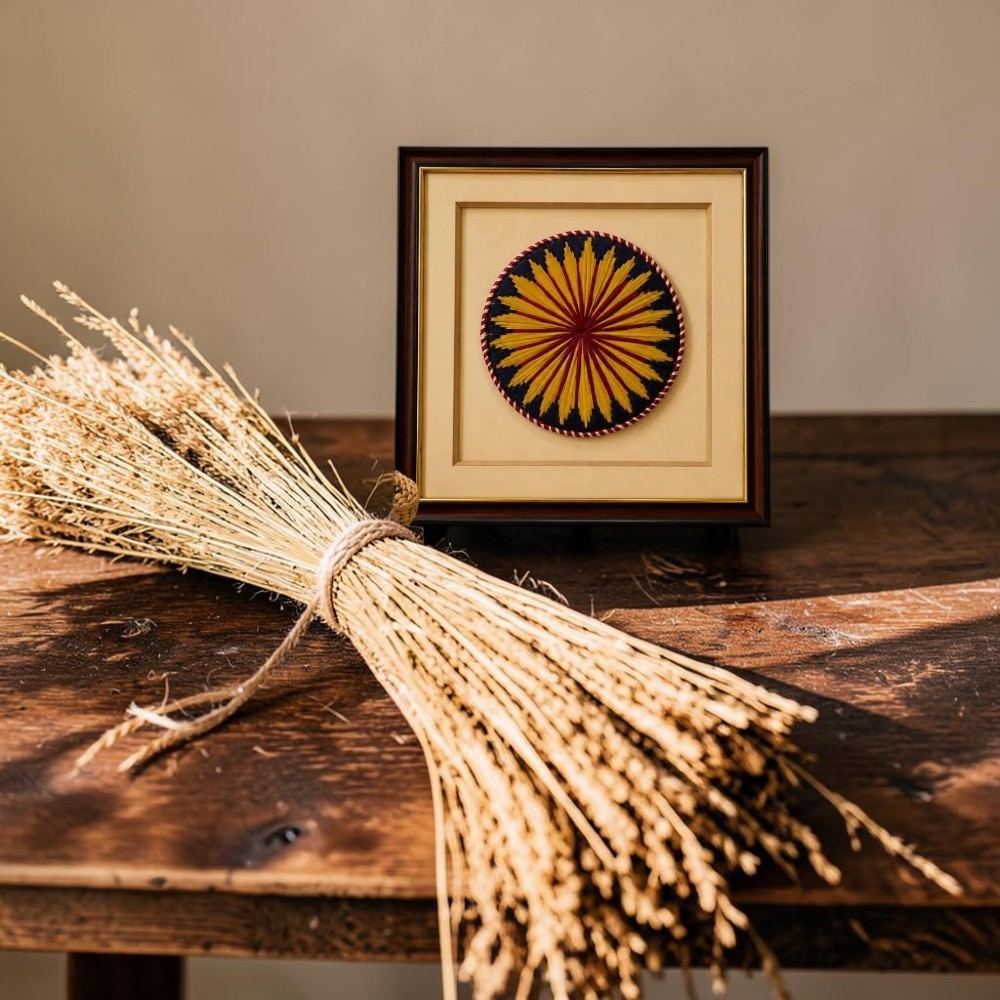
Ortir India (Preserving Indian Art & Culture) के साथ, अपनी ख़ुशी को किसी कारीगर के हुनर की रोशनी बनाइए – because true luxury is when lives come together, and every celebration carries a purpose.
Recent Comments